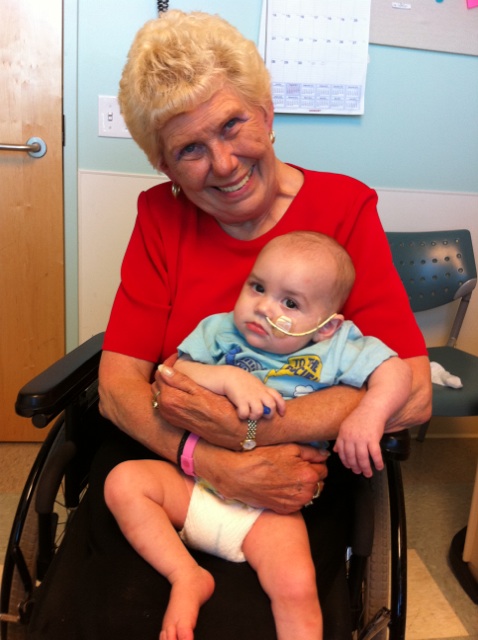
Today is day three of chemo 🙁
They are thinking the big belly, is just gas. If it does not go down, they will do another x ray and ultrasound. I hope it goes down and we avoid all of that.
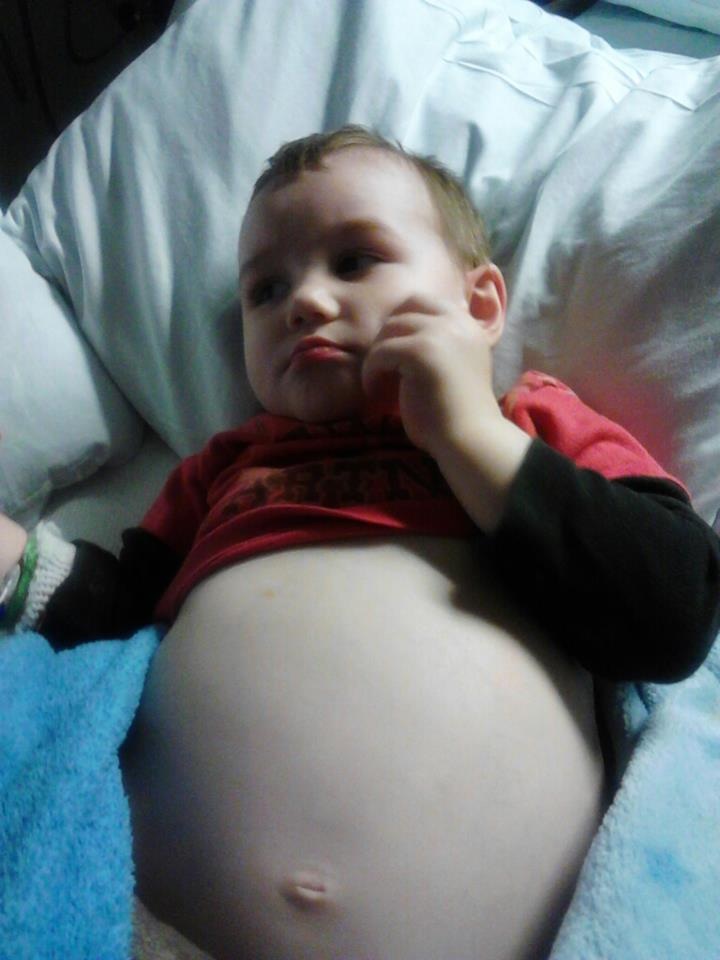

Today is day three of chemo 🙁
They are thinking the big belly, is just gas. If it does not go down, they will do another x ray and ultrasound. I hope it goes down and we avoid all of that.
Today has been very hard, for Liam 🙁 His little belly is very swollen and he’s in pain. They are trying hard to get him comfortable. Hopefully tomorrow will be better for him. I just wish he could be a healthy two year old boy… maybe soon
Liam is a lot more active today, but he is nauseous 🙂 they gave him Zofron and it seems to be helping. Still no clear picture on the exact date of 2nd BMT, hopefully soon so he can put HLH behind him…
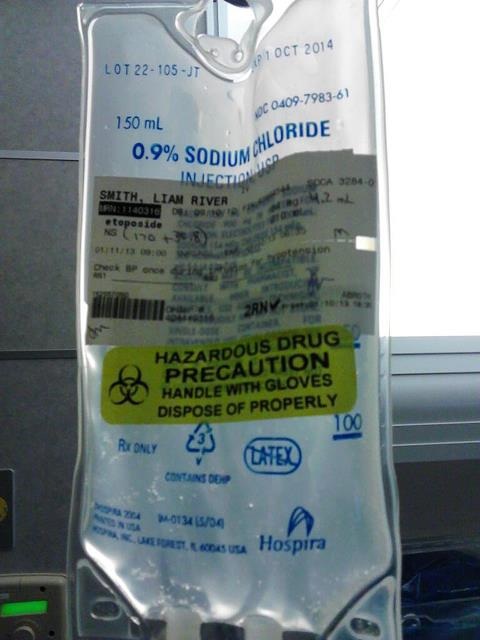
They took Liam off his morphine drip and his belly went from 52.5cm to 48cm. They are going to start chemo in a few days to get his HLH into total remission.
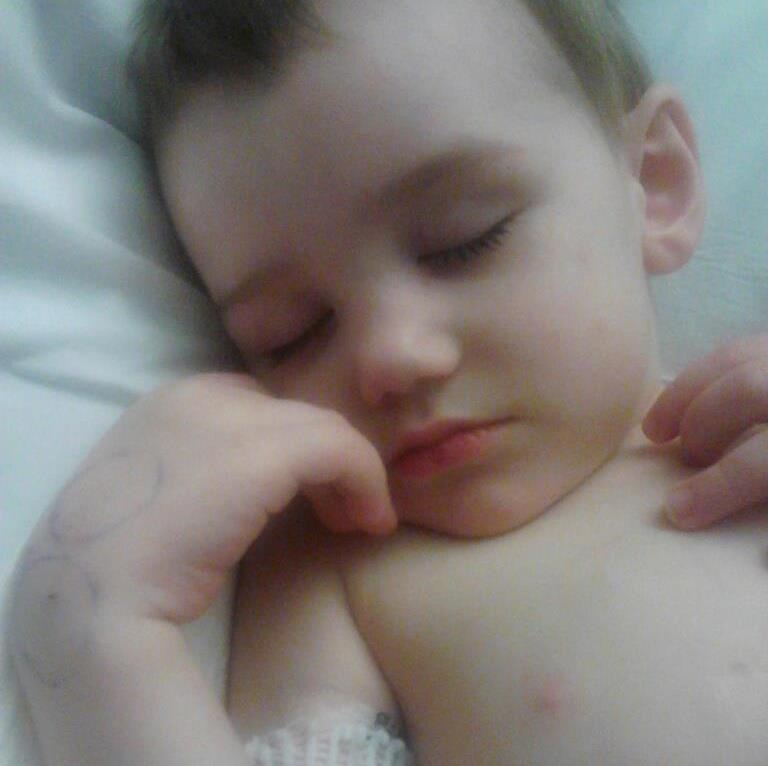
Liam had an ultrasound yesterday , his spleen and liver are swollen. His liver counts were a little lower today. They are leaning towards HLH flare. He hasn’t had a fever since yesterday. His temps have been running low, around 96, his vitals have been good. But, his heart rate was between 60 and 75. Last night it was 110. His last blood pressure was 93/54. His oxygen has been around 98. The spinal tap came back clear of HLH. That was good news. They said the white blood cells were normal From the spinal tap. They haven”t got back the bone marrow results yet. His ferritin yesterday was elevated 4700. They are rechecking it today. His platelets are low, yesterday after transfusion he was 50, today he is 16. They are giving him platelets now. They are going to hook him up to an IV pump for pain medicine. please continue to pray for him.
4:30 – his platelets went up to 32. They are running blood cultures, making sure he doesn’t have an infection. Sometimes that can cause a low temp. His heart rate is running a little higher in mid to upper 70’s. His temp is also up a tiny bit. He is now resting.
3:30 pm – Got a text from Papa, he said Liam is not feeling good today. I think yesterday and the fevers have him wore out. They did an ultrasound of his tummy today. Still don’t have any results back yet. Praying that he will feel better soon and regain his strength. Hard to see him not very active, he is usually so busy.
5:30 pm – UPDATE FROM KRISTY: They are leaning more to GVHD (Graft-versus-Host-Disease) but still can’t rule out HLH will get the results we need tomorrow with the chimerisms. His fevers have not been as high today and Tylenol a tiny less frequent.
What is Graft-versus-Host-Disease ?
SOURCE: http://www.medicalistes.org/gvhd/docs/what_is_gvhd.html
Introduction
Graft-versus-host disease is a frequent complication of allogeneic BMTs. In GVHD, the donor’s bone marrow attacks the patient’s organs and tissues, impairing their ability to function, and increasing the patient’s susceptibility to infection.
Approximately 50 percent of patients undergoing an allogeneic BMT with a related HLA-matched donor develop GVHD. Fortunately, the majority of cases are mild. GVHD is not a complication of autologous BMTs. (In some cases, patients may be their own bone marrow donors. This is called an autologous BMT)
GVHD is often discussed as if it were a single disease. It is, in fact, two diseases: acute GVHD and chronic GVHD. Patients may develop one, both or neither. Acute and chronic GVHD differ in their symptoms, clinical signs and time of onset. (Clinical signs are the results of physical exams, x-rays or lab tests that confirm the existence and extent of a disease.)
GVHD can be a temporary inconvenience or a serious, life-threatening disease. Older BMT potients are more likely to develop GVHD thon younger patients. The incidence and severity of GVHD is also higher among patients whose bone marrow donor is unrelated or not perfectly matched.
The symptoms of GVHD are many and varied, and the list may at first be overwhelming. Keep in mind however that most patients undergoing an allogeneic BMT with a related HLA-matched donor develop only a mild or moderate case of GVHD, or no GVHD at all. Although GVHD can be life- threatening or fatal, most patients survive the disease without long-term disabling side effects.